The rapid development of solar technologies and the growing use of photovoltaic systems create a need for solutions that allow solar modules to be integrated easily into roof systems. Installing them on buildings covered with thermal insulation panels is a particular challenge, where maintaining the continuity and watertightness of the roof system is of key importance.
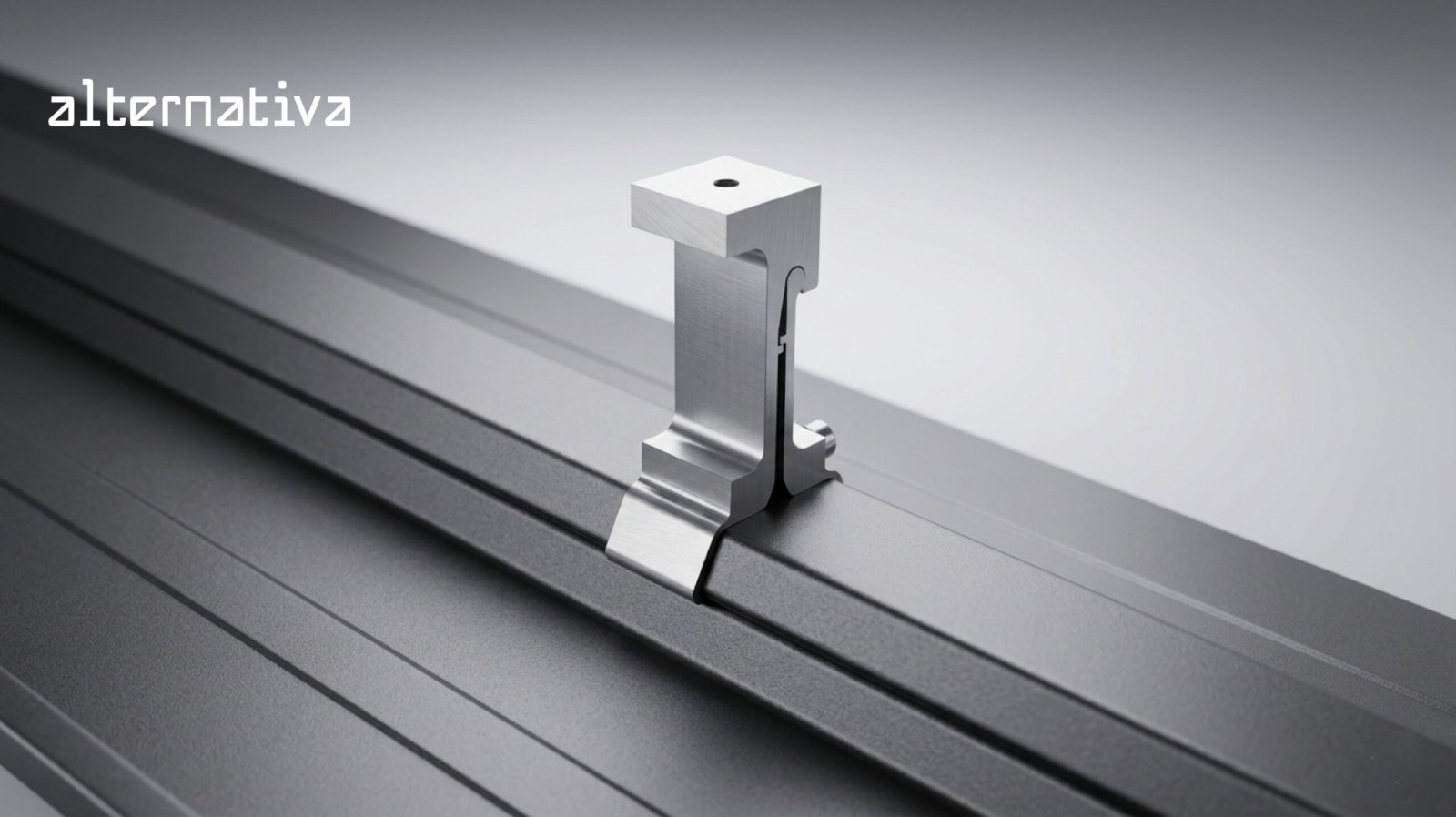
In response to these requirements, a roof insulation panel with a specially shaped trapezoidal rib has been developed. The rib is designed to receive the aluminium mounting rails for solar modules. This design allows a building to be covered with panels that are already prepared for the integration of a solar power plant. The photovoltaic system can equally be installed at a later stage in the life of the building.
In this way an investor can allow for the future installation of solar modules while the building is still under construction, without any later intervention in the roof covering.
Integrating solar systems without drilling through the roof sheet
With conventional systems for mounting photovoltaic modules on roofs made of sandwich panels, the outer sheet of the panel often has to be drilled in order to fix the rails to the substructure. This requires additional sealing and, in the long run, can become a vulnerable point in the roof covering.
The roof insulation panel with its specially shaped rib allows a different approach. The aluminium rails can be fixed directly to the profile of the panel. This avoids perforating the outer sheet, while the continuity and watertightness of the roof are preserved.
The structural aspect of the system
The aluminium rails for the solar modules rest on the geometry of the specially shaped rib of the roof panel, which transfers the load from the solar structure to the roof system. Thanks to the purpose-designed profile, these panels have increased structural load-bearing capacity compared with standard roof sandwich panels, which further contributes to the safe transfer of loads from the solar modules and their rails.
The arrangement and number of rails must be determined separately for each building, depending on climatic loads (wind and snow), the geometry of the roof, the span of the panels and the configuration of the solar modules. The fastening system must be dimensioned by structural calculation in accordance with the applicable technical regulations.
Application on modern industrial roofs
The growing use of thermal insulation panels in industrial and commercial construction creates a need for solutions that allow renewable energy sources to be integrated. This is precisely why a roof insulation panel with an integrated solution for solar rails is a practical answer: it combines the function of the roof covering with preparation for the later installation of a solar power plant. This approach gives investors greater flexibility in planning a building’s energy systems.
Technical note
The solution described here is a structural concept for integrating solar systems into roof sandwich panels. The final technical characteristics of the system, including the arrangement and number of rails, are determined according to climatic loads, the configuration of the roof and the requirements of the specific photovoltaic plant. The structural calculation can be carried out by Alternativa d.o.o. Sarajevo as the holder of this technical solution.
Should the photovoltaic plant not be installed or not be used, this solution presents no obstacle to the standard use of roof sandwich panels and does not affect their function in any way.